 Ancient Masters
HomeSchoolMagus OrderLibraryArtefacts
Ancient Masters
HomeSchoolMagus OrderLibraryArtefacts 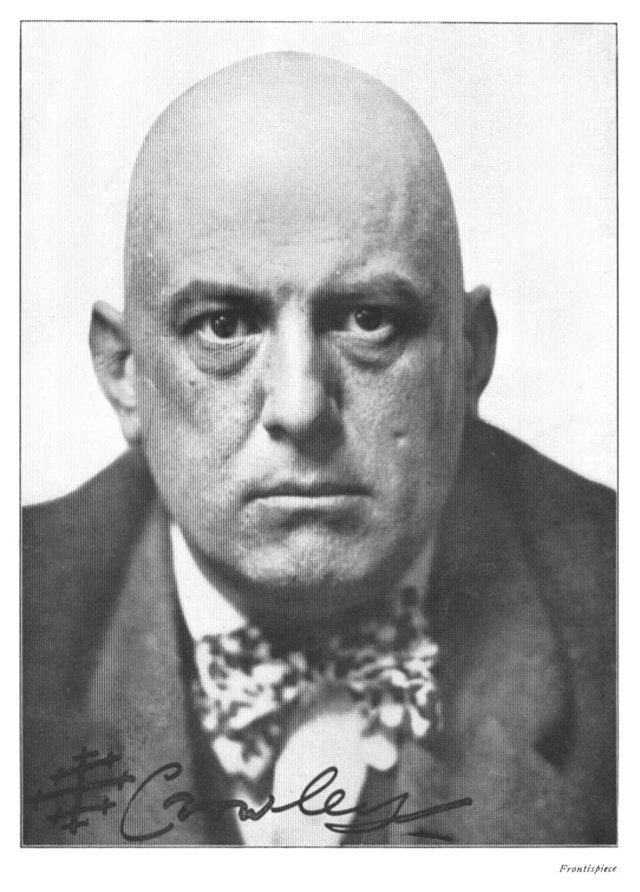
“Do what thou wilt shall be the whole of the Law.” Few sentences in occultism have sold as well. It tells a rebellious youth what they most want to hear: no rule stands above their desires, sexual freedom is granted, and a prophet has declared his own wants as the law of the universe. Desires for sex, wealth, and power are easy to sell to the masses, and this one has been selling for more than a century.
Aleister Crowley is probably one of the most well-known and recognized public figures in magic, or as he called it, magick. He wrote many esoteric books, created a Tarot deck, proclaimed himself Magus and Ipsissimus, and founded a doctrine, Thelema. In a sense, he was trying to build a legacy from the ground up.
The Man
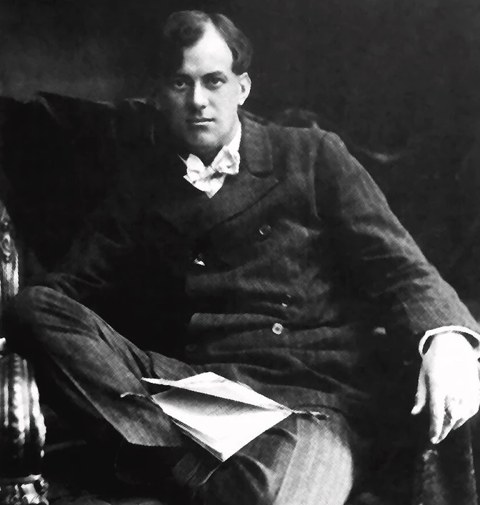
Aleister Crowley was born in 1875 in Leamington Spa, England; his parents were strict Christians. His family was wealthy, with a fortune made in brewing, and he inherited at least £30,000, about $6 million in today's money.
His mother called him “The Beast”, and he kept that name for himself for his entire life: Beast 666, Master Therion.
Crowley wanted to be known, and he chased fame all his life. His expeditions, his quarrel with the Golden Dawn, and the lawsuit that followed put his name in the papers. In 1910 he staged the Rites of Eleusis in a Westminster hall, and one editor called him "one of the most blasphemous and cold-blooded villains of modern times." In 1923, a death at his commune in Sicily fed a tabloid campaign against him, and in 1934 he sued for libel and lost, in the year the papers wrote about him most. He got notoriety, not fame or recognition. His books came out in runs of 100 to 1,000 copies, and hardly sold. His funeral was attended by only a dozen people, and his order and his followers numbered only a few dozen, not even hundreds.
The fame came twenty years after his death, when the counterculture of the 1960s found in him the perfect symbol of everything it was selling: rebellion, sexual freedom, drugs as a way to expand the mind, and contempt for Christian morality. The tabloid label of "the wickedest man in the world" made him the ideal anti-hero. In 1967, the Beatles put his face on the cover of Sgt. Pepper's Lonely Hearts Club Band. Jimmy Page of Led Zeppelin bought Crowley's house on Loch Ness at the start of the 1970s. David Bowie named him in the song "Quicksand" in 1971, and Ozzy Osbourne recorded "Mr. Crowley" in 1980. In 2002, a BBC poll of the hundred greatest Britons placed him seventy-third. Rock musicians brought him to a mass audience.
Occult bookshops sell him as a master of magick and a misunderstood genius. His Tarot Deck was first printed more than 20 years after his death and became one of the world's most widely used tarot decks. Most people who meet Crowley today meet this second figure, the rebel prophet, the glorified image created twenty years after his death, and know little of the man who lived.
The Golden Dawn
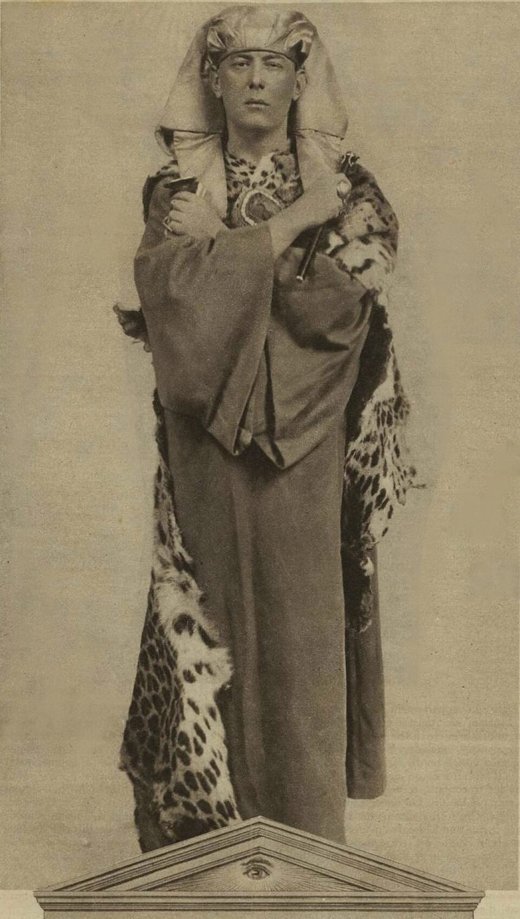
In 1898 Crowley joined the Hermetic Order of the Golden Dawn, an occult society in London that taught magic and the Tarot through a series of grades.
In 1899, Crowley learned from Mathers about an intense magical ritual described in a 15th-century grimoire called The Book of the Sacred Magic of Abramelin the Mage that allowed one to converse with the Holy Guardian Angel, or, in other words, one's higher self. He immediately bought the Boleskine House on Loch Ness for the ritual, paying twice what it was worth. The ritual failed: it required six months of seclusion, and Crowley broke it off in April 1900, too involved in Golden Dawn politics to keep it. He later said he finished it in 1906, in a hotel in Surrey.
In 1900, Crowley wanted to advance a grade, but London members refused. The order's head, Samuel Mathers, initiated him in Paris regardless of other members' opinions, and the quarrel acted like a fuse, igniting the order's internal conflict and splitting it apart.
Mathers acted as an authoritarian leader, telling others he could contact “Secret chiefs,” beings far above anyone in Golden Dawn, and that they should follow his lead. He claimed he had direct instructions from the “above.”
In April 1900 Mathers sent Crowley to take over the order's vault in London, at 36 Blythe Road. Crowley took it on 17 April and lost it two days later, when the landlord refused him entry. After the fallout with the London branch, Crowley left Britain for Mexico. At that time, he still regarded Mathers as his direct superior.
The decisive shift came after Crowley “received” The Book of the Law in Cairo, Egypt, in 1904. He came to believe the Secret Chiefs contacted him and wanted him to replace Mathers.
Crowley published a version of the Goetia with a preface that attacked Mathers, and wrote to him that he was now the visible head of the order. That letter ended his place in the Golden Dawn: the two men never worked together again, and in court in 1910 Mathers's lawyer described Crowley as an expelled member. The relationship collapsed into open hostility. Crowley was convinced Mathers was attacking him by magic, killing his dogs, making his servants ill, and sending a "murderous attack" on Rose, and he answered with talismans and curses of his own.
The final public rupture came in 1909–1910, when Crowley began publishing Golden Dawn rituals and teachings in his journal The Equinox. In March 1910 Mathers obtained a court order to stop the publication; the Court of Appeal lifted it three days later, and the rituals were printed.
His membership in the Golden Dawn was short and volatile, but it gave Crowley the material: the grades and the tables that tie the Hebrew letters, the planets, and the twenty-two Major Arcana together. Forty years later, he turned that material into a new deck. In 1937, he met the painter Lady Frieda Harris. They planned the deck as a six-month project. Harris painted for about five years, some cards eight times, and paid Crowley a regular allowance while she worked. His guide to the cards, The Book of Thoth, came out in 1944 in 200 copies. Neither of them saw the deck printed; the first edition appeared in 1968, six years after Harris died.
Crowley changed the Major Arcana setup to suit his taste. He believed himself the prophet of a new Aeon and rearranged the Arcana to fit the revelation he said he had received. Notably, Justice, renamed Adjustment, took the number VIII, and Strength, renamed Lust, took XI, reversing the Golden Dawn order. The Wheel of Fortune became Fortune, Temperance became Art, Judgment became the Aeon, and the World became the Universe.
Touching and recreating tarot decks to suit one's taste, without extensive knowledge of every Arcanum and the structure of the Tree of the Sefirot, is reckless. If you imagine a tarot card as a radio-wave frequency setup pointing to a particular universal principle, then editing it would mean it now points somewhere else. For example, it could point to an alternate yin dimension that drains energy or infects the meditator with larvae and energy parasites.
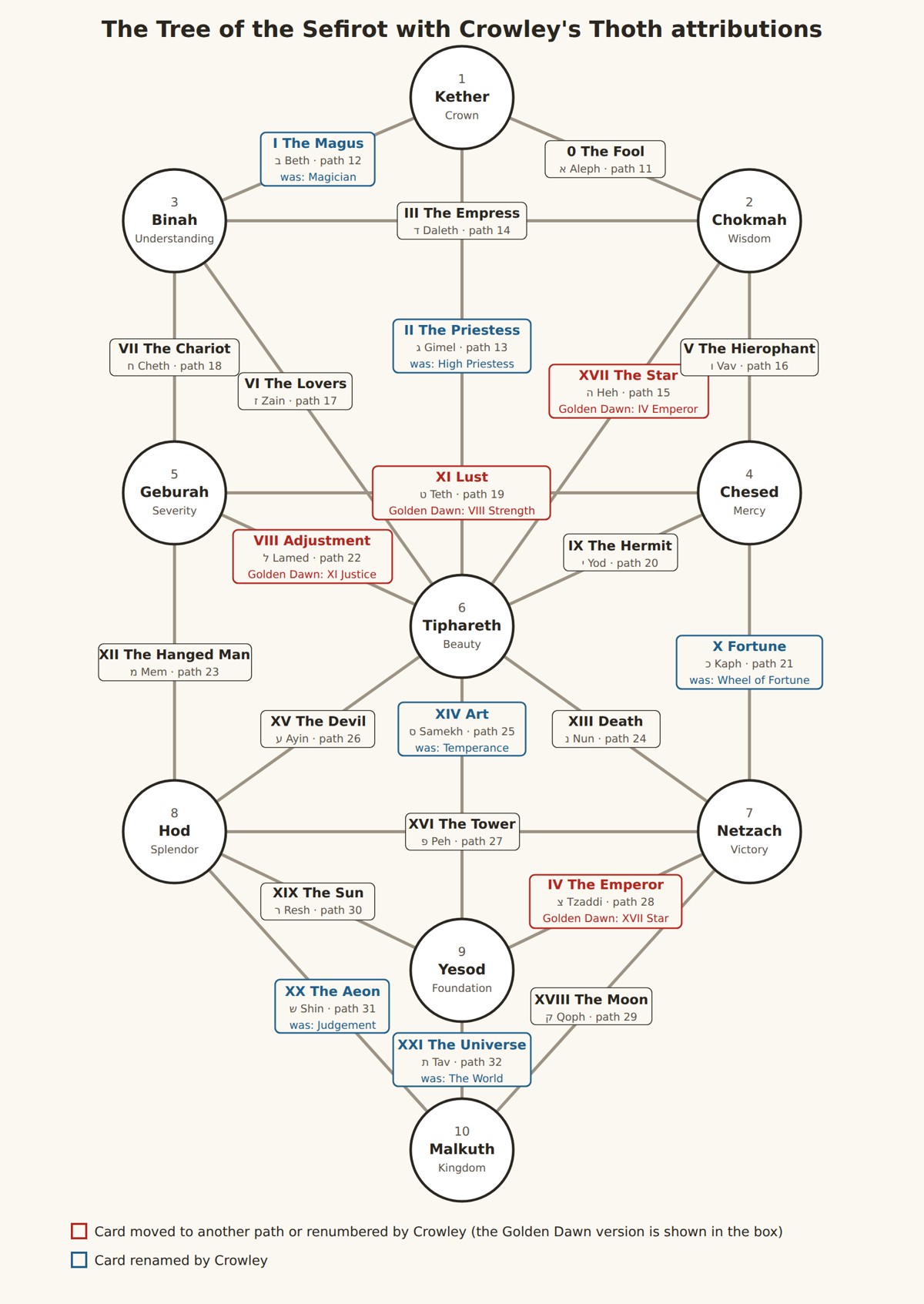
For the overall layout of the Sefirot tree and the alignment of the Arcana with the Sefirot, Crowley's changes would not survive the scrutiny of any competent practitioner of Sefirot magic; he had little real experience working with the Arcana.
Thelema
In April 1904, Crowley was in Cairo with his wife, Rose. He said that, over three consecutive days, a being called Aiwass dictated The Book of the Law to him, one chapter a day, each taking about an hour. Rose, in a trance, is said to have told him first that the god Horus was waiting for him. Crowley later identified Aiwass as his Holy Guardian Angel, the same Angel the abandoned Abramelin ritual was meant to summon, and dated the Aeon of Horus, a new age of humanity, from that week.
The key lines are short and easy to remember. "Every man and every woman is a star" (I:3). "Do what thou wilt shall be the whole of the Law" (I:40). "Love is the law, love under will" (I:57). "There is no law beyond Do what thou wilt" (III:60).
The same book speaks in a harder voice. "Compassion is the vice of kings: stamp down the wretched & the weak" (II:21). "Pity not the fallen!" (II:48). Thelemites read these verses as orders to overcome weakness in oneself. Read as written, they reject pity.
Around the verses, Crowley built a doctrine. His order told each member to "discover for himself his own true will, and to do it, and do nothing else."
Crowley defined Magick as "the Science and Art of causing Change to occur in conformity with Will." The Ordo Templi Orientis (O.T.O.), the order he led in the 1920s, adopted The Book of the Law as scripture.
A Thelemite's day has a fixed structure. Liber Resh prescribes four sun adorations a day: dawn, noon, sunset, and midnight. Banishing rituals clear the space before other work. Yoga trains posture, breath, and concentration. The diary records every practice, its time, conditions, and result. This is structured daily work, and Crowley told his students to test their experiences and write them down.
Another exercise shows a different side of the method. In Liber III vel Jugorum, the student sets a rule for his speech, actions, or thoughts, and each time he breaks it, the text tells him to cut his wrist or forearm sharply with a razor.
A few years after Cairo, Crowley and his friend George Cecil Jones founded an order to teach the system, the A∴A∴. In its first order, the Student acquires "a general intellectual knowledge of all systems of attainment," the Probationer keeps the diary for a year, and the Practicus completes his intellectual training, above all in the Qabalah. In the second order, the Adeptus Minor attains the Knowledge and Conversation of the Holy Guardian Angel. Above him lies the Abyss, and across it the third order. The Magister Templi has achieved the "perfect annihilation of that personality which limits and oppresses his true self." The Magus "attains to wisdom, declares his law," and appears to the world only "at intervals of some centuries." The Ipsissimus is "beyond all comprehension of those of lower degrees" and must "keep silence during his human life as to the fact of his attainment."
Only the Probationer's grade has a stated length. Members work mostly alone, and the superior who supervises them judges their progress.
Who judges the man at the top?
After the desert rituals of 1909, Crowley counted himself a Magister Templi. Later he claimed the grade of Magus; a Magus declares a law, and Crowley had a law in hand from Cairo. In the spring of 1921, in Sicily, he claimed the grade of Ipsissimus. The only witness was Leah Hirsig, his lover, whom he had consecrated as his Scarlet Woman, the partner of whom his scripture says "is all power given" (I:15). Crowley wrote that a Magus appears once in some centuries, then awarded the grade to himself. He made public an Ipsissimus grade that his rules say must stay secret for life.
Crowley gave himself every grade above the Abyss.
The rest of Thelema stands on these claims. The new Aeon follows from his rank as Magus, and the book's authority rests on one dictation and one witness: his wife. In 1925 he added a short comment to the book stating that "questions of the Law are to be decided only by appeal to my writings."
Life of an Ipsissimus
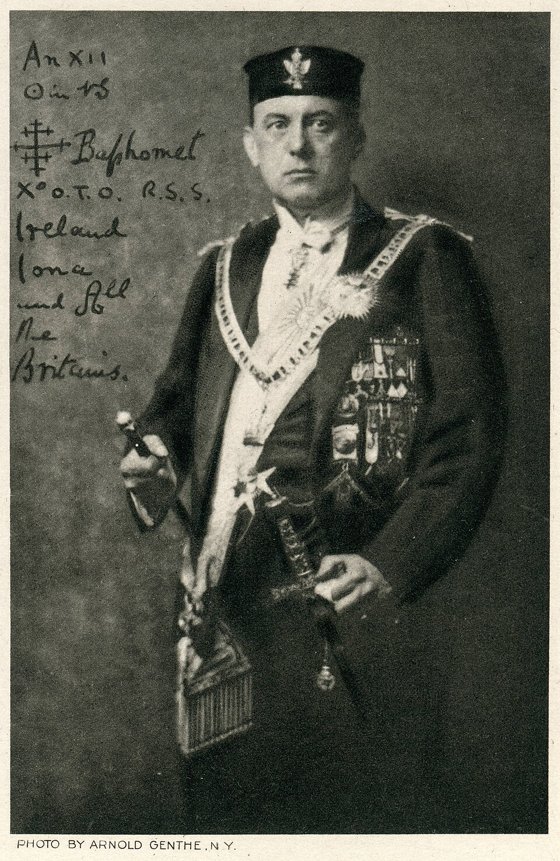
Crowley was born into generational wealth, more than enough to last a lifetime, and he could have followed any path. Yet he wasted it all and ended up in poverty and dependence.
He bought an expensive mansion, paying double for the sake of a ritual that was never completed.
He spent years traveling and funded two Himalayan expeditions.
Books were printed at his expense in limp vellum.
He married, and married again, and was surrounded by women and children, funding a household lifestyle without any income.
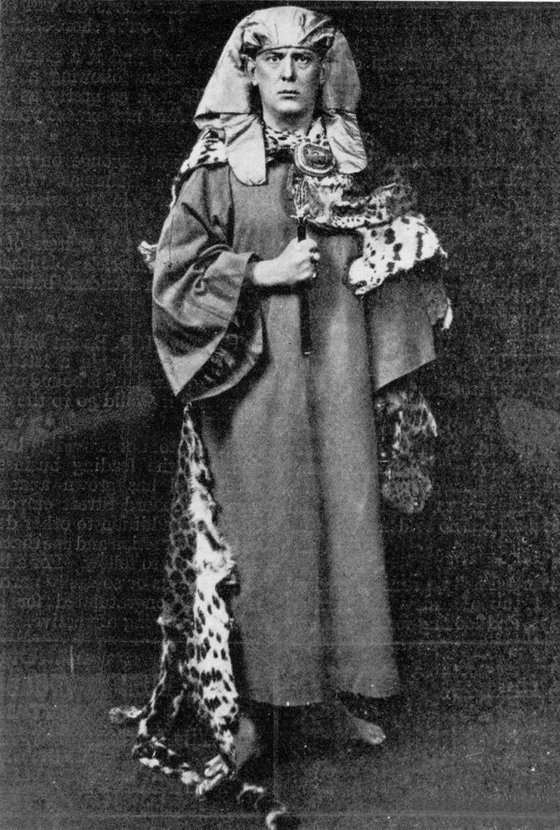
He spent on costumes and show. The Rites of Eleusis of 1910 were seven evenings of recitation, violin, and dance in Caxton Hall, with the performers in silk robes hired from a theatrical costumier. He kept Highland dress: "three kilts, a dress tunic and waistcoat, a tweed coat and vest and a green military tunic."
Reckless spending made most of his capital vanish by 1914. From 1914 he lived on other people's money: donations from followers, loans from moneylenders, remittances from the lodge in California, and Harris's allowance.
In 1903, he married Rose Kelly; their first daughter died of typhoid in Rangoon in 1906. Crowley blamed Rose’s drinking; he divorced her in 1909, and in 1911 she was admitted to an asylum with an ‘alcohol dementia’. Victor Neuburg joined him in Paris in 1914 for a series of sex magic rituals combined with drugs, and broke with him that year.
In 1920 Crowley rented a villa at Cefalù, north coast of Sicily, and named it the Abbey of Thelema. He planned it as a Magic School, and it was to be focused on sex magick. Crowley believed sexual energy to be one of the most powerful available and tried to work with it. He lived there with his women, notably Leah Hirsig and Ninette Shumway, along with their children and other men. His diaries recorded working with each partner, consuming the elixir, what he called sexual fluids. The children saw it; a guest wrote in her diary that the children “witness sexual acts”.
Crowley’s “Magic School” was a place of depravity and sexual freedom. He also bought and made drugs freely available for all residents of the Abbey. That included heroin, cocaine, cannabis, opium, and of course alcohol and tobacco.
Crowley believed free access to drugs would reduce temptation, which is exactly what a drug addict would like to believe.
It is fair to note that the Abbey of Thelema, where Crowley lived, taught and practiced sex magick under drugs, was run in unsanitary conditions, lacking any sensible hygiene or cleaning, with dogs and cats running around, excrement and waste not being managed.
Hirsig had borne Crowley a daughter, Anne Leah, called Poupée, in February 1920. She brought the baby to the Abbey in April, already sick, and Poupée spent the rest of her short life in that house. Crowley and Hirsig tried a sexual magick operation with the object "To make her strong and well." It failed. Hirsig took her to Palermo for treatment, and Poupée died there on 14 October 1920, at seven and a half months old.
The razor of Liber Jugorum was in use at the Abbey. In 1934 Crowley admitted under oath that, with his approval, a resident cut himself with a razor whenever he said the word "I."
Being a lifelong addict himself, Crowley wasted significant amounts of money on drugs throughout his life.
Crowley took hashish for his rituals from about 1899, and at Cefalù logged cocaine on sixty days of 1920 alone. Heroin, first prescribed for his asthma, appears in his diary from January 1920, and he used it, with a possible break from 1924 to 1939, until his death; his death certificate calls him a "Chronic Heroin Addict." He was also smoking and drinking alcohol.
Frank Bennett, the head of the O.T.O. in Australia, came in the summer of 1921 to study with the master. He got the ninth degree in the Order, the degree of sex magic, and he sailed back home with malaria and addicted to heroin.
In February 1923 a young Oxford graduate, Raoul Loveday, died at the Abbey. His widow sold her story to the British papers, and in April 1923 the Italian government ordered Crowley out of Italy. The police had been reporting on the Abbey since July 1922. A Palermo police letter of 1936 gives the reason: rites "based on obscene and perverse sexual practices, in which three female foreigners participated who were living with him as if married."
In 1924, Hirsig was replaced by a new Scarlet Woman, Dorothy Olsen. Hirsig went back to teaching in America and later rejected Crowley’s claim to be a prophet. Crowley moved from partner to partner: he married Maria Teresa Sanchez in 1929 so that she could enter Britain, kept lovers in Berlin and London in the 1930s, and fathered a son in 1937.
In 1935 he was declared bankrupt, with debts of £4,710, nearly $500,000 today; £846 of it, about $88,000, was the cost of the libel case. He owed £814 for clothing and boots, about $85,000 today, and £265 for wine and tobacco, about $28,000. His creditors' lawyers noted that he ordered the most expensive clothing and tobacco.
In 1945 he moved into Netherwood, a boarding house in Hastings on the south coast, and a local doctor supplied his heroin on prescription. He wrote letters about who would lead his order after him, signed his will, and won a chess match for the Hastings club.
Aleister Crowley died at Netherwood in December 1947, aged seventy-two, of degeneration of the heart muscle and chronic bronchitis. About a dozen people came to his funeral in Brighton, and the newspapers called it a Black Mass. He had been an Ipsissimus, by his reckoning, for twenty-six years.
Crowley did exactly what youth do on modern social media: expose themselves as doing something vile, provocative, or repulsive to gather attention for their persona. He offered a £100 prize for the best essay on his poetry, invited the press to his rites, and in July 1915 took a launch to the Statue of Liberty at dawn, read a declaration of Irish independence, and scattered a torn passport on the water. When a newspaper attacked him in 1922, he wrote that he was "content to enjoy the absurdity and profit by the publicity." He surely loved being called the wickedest man and the beast. Provocation and reckless spending for fame were his calling.
The Fifteenth Arcanum
Crowley either misunderstood the teachings or never received them, which is reasonable, given how few years he spent in the order, how busy he was chasing fame and glory, and how he leaked “internal materials” to the public. He fell under the sword of Damocles of the Fifteenth Arcanum.
He didn't have nearly enough guidance before he started publishing books or founded a Magick Order; he proclaimed himself Ipsissimus or some other ridiculous title, meaning his Ego took over and led him astray. Imagine climbing a mountain with a massive weight on your shoulders; the higher you climb, the more weight you drag, until it becomes impossible to progress. That is the soft lock in cultivation. Even now, many people are interested in Crowley and Magick and may be led astray by that false image of a false prophet.
In our tradition, the Fifteenth Arcanum tests attachment, lust, and addiction. We assume that Crowley failed them. The failure explains the orgies dressed as sex magick, the heroin, and the years of addiction, and it explains why his discipline needed a razor. A teacher who needs pain and bleeding to hold himself, or his students, to a vow shows his incompetence: a man who had passed those tests would have no use for the blade. Sexual energy is a resource to cultivate and direct with consciousness. Crowley built his higher degrees on indulging it, and his life shows the cost of that path (Sexual Energy in Magic).
The Fifteenth Arcanum spans from the Manipura level to peak 4.1 mage. Passing 15A is impossible without overcoming all attachments, addictions, and weaknesses of the soul, and the Ego's countless traps. When you cannot wield the Arcana in your consciousness properly, you become its victim. Dabbling in 15A energies without proper preparation and knowledge naturally leads down a path similar to Crowley's.
Some of Crowley's ideas were right, but he didn't know the path forward. The idea that you need to stop using the word “I” to get rid of the ego is childish. Even if he realized that he had to overcome addictions and get rid of the ego, the Ego was his biggest problem his entire life. Instead of getting rid of all addictions, he developed more addictions. He thought that easy access to addictive substances made them less forbidden or desirable. This is wishful thinking.
Even the phrase “do what thou wilt” isn't bad… it is just that, when given to a common person, they start believing they have to do their “desires.” The will was meant to be the spirit's will. If Crowley himself could sense that will, he would not have so many troubles in life. Meaning the whole paradigm, the whole teaching falls apart like a broken mirage.
He is an Ego who thought he got rid of Ego; he was an addict who thought he could overcome addiction. That is how traps work: a perpetual loop of misery and suffering, repeating the same mistake over and over, thinking you are near an exit only to go another round deeper.
Another point: even if you never work with magic, the Arcana act on you. Any person who has addictions and attachments is a victim of 15A; try to find a single person who is free from that. The Arcana exist in every consciousness, and magic tradition studies consciousness and its evolution.
Summary and Discernment
Crowley's system makes the student read before he practices. His grade ladder begins with "a general intellectual knowledge of all systems of attainment," continues with complete intellectual training in the Qabalah, and leads him through shelves of correspondence tables, commentaries, and rituals, most of them written by Crowley.
A person who builds his path out of information stays locked at the Manipura level, no matter how much he learns; the more he learns, the more advanced he believes himself to be. You need direct experience to advance your soul, not a pile of worthless data picked up in books and notes. Read more in Intellectualizing the Path.
Although he was taught in the Golden Dawn and got something out of it, he left behind no system even remotely capable of teaching someone to become a mage. He never understood what it means to become a mage or how the process works.
Crowley believed he was the prophet of a new age and a Magus of a kind that appears once in centuries. He was a deluded man who wasted a fortune and a life chasing illusory vanity and Ego. The money went on robes and stage shows, on kilts and the most expensive clothes, on wine and tobacco at the top price, and, across decades, on heroin and many other now-illegal heavy drugs.
So, in the end, what level of development did Aleister Crowley have?
AP low Anahata.
Let’s compare this with his version.
He worked through the lower grades in the early 1900s.
- He took the grade of Magister Templi on 3 December 1909, in the Algerian desert, during the workings later published as The Vision and the Voice.
- He claimed the grade of Magus in 1915–1916.
- He took the grade of Ipsissimus on 23 May 1921 at the Abbey of Thelema in Cefalù, with Leah Hirsig as the only witness.
According to Crowley himself, he reached the highest grade of Ipsissimus.
In his grading system, Ipsissimus is linked to 1A and Kether Sefira. It is a level of AP above the Sahasrara chakra.
AP low Anahata is someone at the border of the magic tradition but not quite inside yet.
You could see those levels yourself, for him or anyone else, with a photo, if you passed the foundation training and unlocked ESP abilities. Identifying and seeing AP position is a priceless tool for avoiding the delusion that you know where you are and what level you have. Human Ego often considers itself the most important thing (the chosen syndrome).
Sources
The man and his fame
- Wikipedia, "Aleister Crowley" (family, Plymouth Brethren, Cambridge, the Golden Dawn, Boleskine, the Mathers case, the 1923 press campaign, Sgt. Pepper, the BBC poll, the funeral): en.wikipedia.org
- Leicester Mercury, 28 Feb 1949 (the inheritance of £30,000; the estate): aleistercrowleytimeline.com
- The Looking Glass on the Rites of Eleusis, 1910, quoted in Wikipedia, "Aleister Crowley"
- Print runs (100 to 1,000 copies) and the number of members at his death: Wikipedia, "Aleister Crowley"; rodneyorpheus.com
- Wikipedia, "List of images on the cover of Sgt. Pepper's Lonely Hearts Club Band": en.wikipedia.org
- Wikipedia, "Boleskine House" (Jimmy Page): en.wikipedia.org ; "Quicksand (David Bowie song)": en.wikipedia.org) ; "Mr. Crowley": en.wikipedia.org
The Golden Dawn and the Thoth Tarot
- Wikipedia, "Hermetic Order of the Golden Dawn" (Mathers, the Paris initiation, the split of 1900, the Secret Chiefs): en.wikipedia.org
- The Confessions of Aleister Crowley, vol. 3 (Boleskine bought "by paying twice as much as it was worth"): aleistercrowleytimeline.com
- Wikipedia, "Thoth Tarot" (the renamed and renumbered trumps; The Book of Thoth, 1944, 200 copies; first printing 1968): en.wikipedia.org
- Wikipedia, "Frieda Harris" (the allowance; the Tarot project): en.wikipedia.org
Thelema and the grades
- The Book of the Law (Liber AL vel Legis), Wikisource — I:3, I:15, I:40, I:57, II:21, II:48, III:60: en.wikisource.org
- One Star in Sight (the A∴A∴ grades; Magus "at intervals of some centuries"; Ipsissimus to "keep silence"; "discover for himself his own true will"): thelemicunion.com
- Liber III vel Jugorum (the razor): neonvagabond.xyz
- Wikipedia, "The Book of the Law" (Cairo, Aiwass, Rose's trance) and "Thelema" (the Comment of 1925, the Aeon of Horus): en.wikipedia.org ; en.wikipedia.org
- Wikipedia, "Magick in Theory and Practice" (the definition of magick) and "Liber Resh vel Helios": en.wikipedia.org ; en.wikipedia.org
- Wikipedia, "A∴A∴" (founding with George Cecil Jones): en.wikipedia.org ; "Ordo Templi Orientis": en.wikipedia.org
- Wikipedia, "Leah Hirsig" (the Ipsissimus claim of 1921 with Hirsig as the only witness; Dorothy Olsen; later life): en.wikipedia.org
Private life, the Abbey, and the drugs
- Collected Works, vol. 1 (limp vellum): aleistercrowleytimeline.com
- Aleister Crowley Timeline, 1914 (Boleskine signed over; New York with $200): aleistercrowleytimeline.com
- Penny Illustrated Paper, 5 Nov 1910 (the Rites of Eleusis; robes hired from Willy Clarkson): 100thmonkeypress.com
- The Confessions, vol. 4, part 2 (the Rites of Eleusis; the Highland dress): aleistercrowleytimeline.com
- Wikipedia, "Rose Edith Kelly": en.wikipedia.org ; "Victor Neuburg (poet)": en.wikipedia.org)
- Wikipedia, "Abbey of Thelema" (the villa; the unsanitary house; dogs and cats): en.wikipedia.org
- Crowley's diaries, 1920 to 1923 (the sex-magic workings and the "Elixir"; cocaine; heroin; opium): aleistercrowleytimeline.com and following years
- Crowley's diary, 1920, on Poupée (14 and 21 Apr; 2, 8 and 11 Oct, the operation "To make her strong and well"): aleistercrowleytimeline.com ; aleistercrowleytimeline.com
- Mary Butts's diary, 7 Aug 1921 ("The children here not only witness sexual acts"): aleistercrowleytimeline.com
- Mary Butts's diary, 17 Aug 1921 (no bathroom or decent lavatory, no washing facilities, excrement around the house): aleistercrowleytimeline.com
- Jane Wolfe's diary, August 1920 (mosquitoes, fleas, flies): aleistercrowleytimeline.com
- Christopher Partridge, "Aleister Crowley on Drugs" (drugs bought in Palermo and made available to residents; hashish from about 1899): eprints.lancs.ac.uk
- Wikipedia, "Frank Bennett (occultist)": en.wikipedia.org)
- Aleister Crowley Timeline, Raoul Loveday (the death at the Abbey in 1923): aleistercrowleytimeline.com
- Palermo Police Commissioner to the Chief of Police, 6 Jun 1936 (the expulsion of 1923 and its reasons): aleistercrowleytimeline.com
Money, the courts, and the last years
- Transcript of Crowley v. Constable & Co., 1934 (the razor answer under oath): aleistercrowleytimeline.com ; synopsis of the case and the verdict: aleistercrowleytimeline.com
- Official Receiver's summary of the 1935 bankruptcy (liabilities £4,710; the listed debts): aleistercrowleytimeline.com
- Constable's solicitors' notes of the 1935 public examination ("the most expensive clothing"; 25 shillings a pound for tobacco): aleistercrowleytimeline.com
- Wikipedia, "Agape Lodge" (remittances from California): en.wikipedia.org
- Wikipedia, "Dangerous Drugs Act 1920" and "Rolleston Committee" (heroin on prescription in Britain): en.wikipedia.org ; en.wikipedia.org
- Crowley to Dr Charnock Smith, 5 May 1945 (heroin on prescription in Hastings): aleistercrowleytimeline.com
- Aleister Crowley Timeline, Netherwood and 1947 (the succession letters, the will, the chess match): aleistercrowleytimeline.com ; aleistercrowleytimeline.com
- Death certificate, 1 Dec 1947 ("Myocardial degeneration. Chronic bronchitis. Chronic Heroin Addict."): aleistercrowleytimeline.com
Photos (all public domain, Wikimedia Commons)
- Frontispiece, The Equinox I:10, 1913: commons.wikimedia.org
- Crowley as a young man: public-domain portrait, early 1900s
- Golden Dawn ritual dress, about 1899: commons.wikimedia.org
- O.T.O. regalia, 1919, photo by Arnold Genthe: commons.wikimedia.org
- Ceremonial robes, 1910: commons.wikimedia.org
Currency. Historic sums are given in approximate current US dollars, from UK price indices (1896 ×165, 1935 ×80) and £1 = $1.30.