 Ancient Masters
HomeSchoolMagus OrderLibraryArtefacts
Ancient Masters
HomeSchoolMagus OrderLibraryArtefacts This article is about one of the most damaging habits in cultivation and esoteric communities: intellectualization. It is what destroys the potential of most practitioners, and it is the reason so few people ever advance into magic and reach the Anahata level.
We have already set out the framework of the Assemblage Point (AP) — how it reflects the overall level of spiritual development, and how it can be measured. Measurement is what makes verification possible, and verification is what gives discernment. It separates masters who have reached a very high level of development from people who are imitating a spiritual teacher on social media.
How the Assemblage Point Rises
The AP position grows with accumulated experience. Spirit reincarnates into form; that form passes through a lifetime, gains knowledge and experience through interaction, and builds qualities and skills that add up to the ability of the AP to hold a certain position.
For the first three castes — Muladhara, Svadhistana and Manipura — that experience can be gained inside ordinary society. You live your life, do your job, deal with people. In previous lives you could go to war, join a martial order, overcome fears. Those experiences accumulate over hundreds of incarnations and thousands of years, and they are what allows a spirit to reincarnate with the AP at the Manipura level.
To step onto the Anahata level, mundane experience no longer works. It has no further value there, and you cannot progress by living a normal life in society. Anahata requires experience gained outside the physical and mundane realms, and that is what spiritual traditions and schools exist to provide. Finding a teacher — someone already in deep contact with spiritual reality who can guide you to it — becomes the first priority. People who reach this stage start to see the value of spiritual development and personal evolution. To everyone else it looks like a waste of time and resources.
Cultivation is a choice. Those who complete the Manipura level and go further into Anahata and magic are making a conscious choice, backed by real actions and effort. At that point it is no longer random.
Levels in Magic
The level of magic cultivation can be read from the stable AP position.
The first three chakras are mortals living in mundane samsaric reality — workers, merchants, warriors. Between Manipura and Anahata there is a gap. Crossing it brings contact with the spiritual world and unlocks ESP abilities.
In the magic tradition we commonly use the terms 4.1, 4.2 and 4.3 to describe the levels of a Mage's development:
| 4.1 | The first level, Anahata. It spans from low Anahata to low Vishudha. |
|---|---|
| 4.2 | The second level, Vishudha. It spans from Vishudha to low Ajna. |
| 4.3 | The third level, Ajna and above. |
We also distinguish between grades within a level, because they matter a great deal. A person with the AP at upper Anahata is significantly more advanced and more capable than someone at mid or low Anahata. Each step upwards in the hierarchy takes far more than the previous one, which means far fewer people stand on it.
In practical terms, 4.2 is qualitatively different from 4.1. At 4.2 a Magus regains his memories through the process of reincarnation; he is no longer a mortal who incarnates and builds a new personality each life. At 4.3 there is no need to incarnate in the mundane realm at all in order to gain experience. That is why meeting someone at 4.3 is so rare — they simply exist outside of this reality.
Samadhi
Many masters at 4.2 choose to enter samadhi. Instead of going through the reincarnation cycle, they walk the path from 4.2 to 4.3 in the spiritual worlds rather than the physical one. They do this by anchoring the physical body and gaining experience outside it, without needing to incarnate. Technically they keep a slight connection to the body, and on the physical plane that connection prevents the body from the normal process of decay. It can take many thousands of years of training to advance from 4.2 to 4.3.
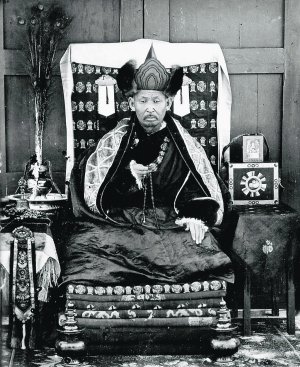
One example is Dashi-Dorzho Itigilov, also written Itigelov, the twelfth Pandito Khambo Lama of the Buryat Buddhists, who entered meditation in 1927 at the age of 75. His body was exhumed in 1955 and again in 1972, and publicly in September 2002; it is kept at the Ivolginsky datsan near Ulan-Ude, in Buryatia, where it draws pilgrims (public record). There are many more cases. Beyond the publicly known ones, hundreds exist in remote caves and mountain areas, far from human sight and reach.
Experience Is Not Information
So far we have described how experience is gained, and how it turns into qualities, which are persistent traits, and skills, which are siddhis. One thing that many people do blocks that process completely. It is called intellectualization.
The intellect — our Vishudha chakra — creates mindforms, which are information constructs. These constructs may describe reality, but they are not reality. The reason a person cannot develop by consuming mind constructs is the same reason you cannot build your body by consuming imaginary pancakes. Reality is 22-dimensional. Mindforms are limited in dimension. Think of a flat paper map against the three-dimensional space of an actual planet: the difference is immense.
Could you explore planet Earth by looking at a two-dimensional map of it, or by memorizing one?
When you interact with real powers through practice under proper guidance, you gain experience that is unique. That experience is yours alone. If you read a book and agree with something in it, listen to a lecture, or try to build "knowledge" through a thought process, you have entered a deadly pitfall.
What Intellectualization Does to a Practitioner
People who try to intellectualize spiritual development stay locked at the Manipura level. They constantly search for new practices, new methods, new books, new teachers. Nothing really works. At some point, as mind constructs build up on the mental body, they may come to believe they are advanced and cultivated. That belief is a delusion, and it is one of the core pitfalls of cultivation.
For the same reason, scientists do not develop magical traits and qualities, despite significant work at the Vishudha level and a trained mental body.
A teacher can guide you, but you cannot read your way into being a Magus. The difference between information and spiritual experience can seem subtle at first, because when you describe a real experience gained from practice you are also working your Vishudha and also producing a mental construct.
The more you intellectualize, the better you get at intellectualizing, and the more the ego believes itself to be an advanced practitioner. The more confident such a person is, the more likely they are to gain followers, who then learn the same mistake from them.
Franz Bardon and His Followers
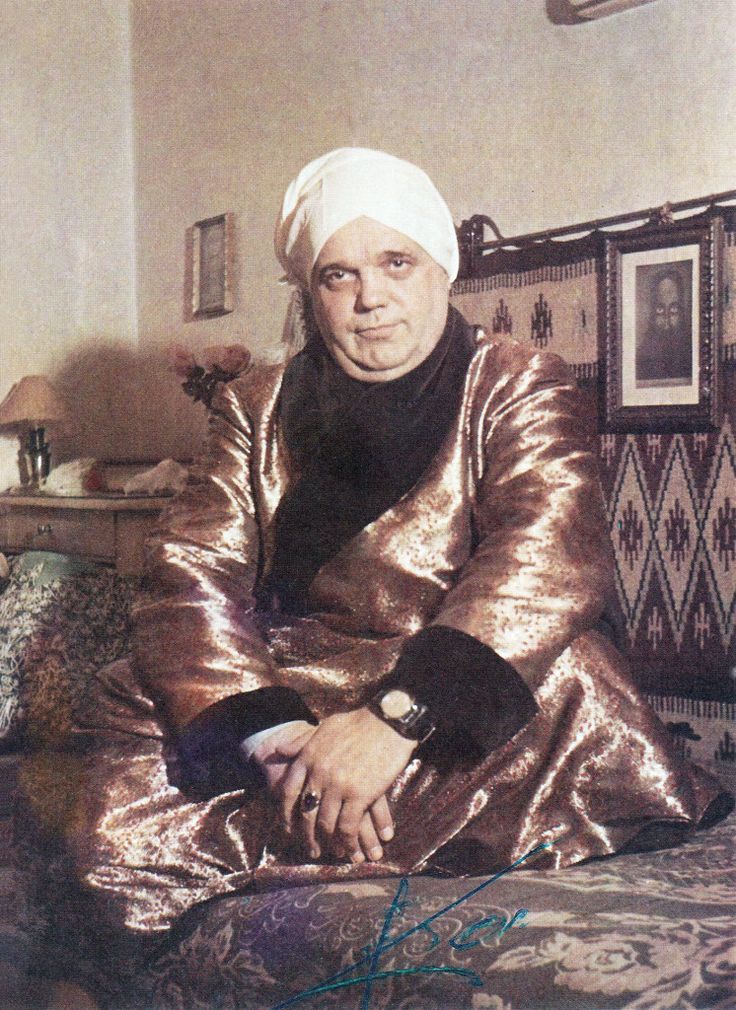
One vivid example is Franz Bardon (1909–1958), the Czechoslovak author whose system of hermetic training is still taught today. Bardon himself was a mage, with the AP at low to mid Anahata in our assessment, which is a very early beginner 4.1 level. His methods and books — above all Initiation into Hermetics, published in German in 1956 and in English in 1962 — gained wide popularity among self-taught practitioners.
I have checked multiple instructors teaching Bardon's system, some of whom have been practicing and teaching those methods for decades. None of them had an AP above the Manipura level. None of the followers of Bardon's methods had attained AP Anahata. The vast majority are perpetually stuck at Manipura, in most cases low or mid, and unable to make any progress, because intellectualizing the path — replacing the experiences needed to grow the soul with prepared mental constructs — is a one-way trap. The more of such information a person learns, the less capable they are of taking a step forward. Intellectual knowledge chokes the hope of progress into Anahata within a lifetime.
There is a second problem with that lineage of teaching. Believing that someone at an early Anahata level could have possessed a full and complete system of magic development, or even known how to get there, is beyond naive. It is like believing that someone in middle school could teach advanced science and guide a student through a doctorate.
What This Means for Training
As we have said before, magic only starts at Anahata. Anything before that is not magic. Our foundation training — about five years of daily practice, 18 modules and over a thousand hours of training — is the way for someone at Manipura to lay the groundwork of personal experience, skills and qualities needed to move toward Anahata.
Those who reach the entry point of 4.1 — low Anahata, or the border between Manipura and Anahata — can join our Magus Order, a closed community of cultivators, and take up the curriculum at level 4.1, which can include one-on-one training sessions and group work in a magic circle.
Neirong © 2026