 Ancient Masters
HomeSchoolMagus OrderLibraryPodcastArtefacts
Ancient Masters
HomeSchoolMagus OrderLibraryPodcastArtefacts 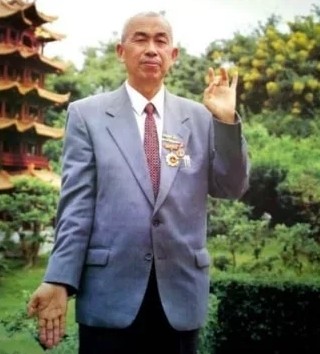
Qigong Boom
China experienced a "Qigong Boom" from the late 1980s to early 1990s, as qigong practices expanded from niche activities to mass movements involving tens of millions of practitioners. The rise of qigong reflected a desire for health, meaning, and cultural identity after years of suppression. Many people saw qigong as an accessible and low-cost alternative to conventional healthcare.
National pride in qigong as a special Chinese contribution to science, along with early backing from certain scientists and officials, fanned the flames of the craze. Charismatic masters staged large public healing shows and transmitted qi, helping the practice spread rapidly and cover spiritual and social needs.
Tian Ruisheng was one of many fraudulent masters of those years, when more than two thousand qigong organizations operated in China and masters competed in absurd promises of healing and supernatural power.
Imagine that you are in 1993, right in the middle of the qigong fever in China. For months now, rumors about a new technique from Luoyang have been circulating in your area. Every day, your neighbor carries out the fifteen arm movements in the morning and evening. She says she feels better than she has in years and, once, while practicing, noticed a smell of flowers on her hands. Now the man who teaches the technique has come to Beijing, and you are in the crowd at the Capital Gymnasium.
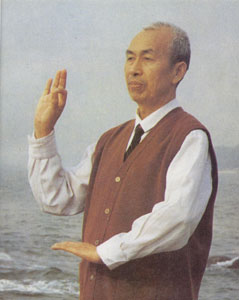
The man on stage is Grand Master Tian Ruisheng, a retired worker in his sixties from Luoyang, and his followers believe he possesses a Buddhist secret two thousand years old. When he raises his hands, people nearby say they smell jasmine; others claim to smell osmanthus. His followers say he selects the scent at will: either jasmine, osmanthus, or roast chicken.
A later account from within Tian's circle stated that on the very same day forty-seven patients who were paralyzed managed to get up and walk, and twenty-one people who were mute began to speak, six of them having been mute from birth.
When you get home, you learn the evening ritual. At ten o'clock Beijing time, you face Luoyang, raise your right hand until your palm feels warm or tingles, and hold it over a glass of water. The water now carries the master's qi. You drink it for illness inside the body and rub it on the skin for illness outside. Millions of people, you are told, raise their hands toward Luoyang in the same ten minutes, and the people of Luoyang raise theirs toward the master's house.
With the smell of jasmine still in the air and millions doing the same thing at the same minute, what reason would you have to doubt any of it?
About two years later, the Grand Master died of liver cancer. The people closest to him told no one, and his followers went on facing his house at ten o'clock.
Tian Ruisheng Story
The story begins with a sick 12-year-old boy covered in hard scales, poor and with no money for a doctor, who is healed by a wandering Buddhist monk. The monk not only healed the boy but also passed on a secret cultivation method with one condition — keep it secret for 50 years. In 1988, those 50 years passed, conveniently in the middle of the qigong craze; Tian Ruisheng taught the method to the public and quickly gained popularity.
The texts from Tian's circle give the monk a name: Wu Kong. The name recalls Sun Wukong, the Monkey King of Journey to the West, the novel in which he escorts the monk Xuanzang to India to bring back the Buddhist scriptures. Xuanzang also appears in Tian's lineage. Tian repeatedly said that the Tang-dynasty pilgrim had practiced the method, and so had Ji Gong, the beloved folk saint of the Southern Song. Another text adds the Lotus-Born master who carried Buddhism to Tibet. The monk who founded the line two thousand years ago has a different name in each text.
These are the most famous holy men a Chinese reader could name, all gathered and fitted into a single Fragrant Qigong backstory. A Chinese critic calls the monk "a Master Wukong who never existed." The whole lineage, from the monk to the boy, rests on one witness: Tian.
Fragrant Qigong – Fifteen Movements
In Chinese, the practice is Xiang Gong (香功), the fragrant method. Its full name is longer: China's Buddhist Fragrant Wisdom-Enlightenment Qigong (中国佛法芳香型智悟气功). In English, it is sold as Fragrant Qigong or Aromatic Qigong.
What does a student of this ancient secret do? He performs fifteen arm movements with names such as Golden Dragon Wags Its Tail, Rowing the Boat, and Turning the Dharma Wheel. Each movement is repeated thirty-six times, and the whole set takes about fifteen minutes. He may stand, sit, or lie down; he may exercise while talking or watching TV, and he can do it even on a bus or a train.
The second level adds fifteen more movements, done standing, with bent knees and swaying hips.
The third level was secret. Tian taught it orally and said no one could learn it without him. According to John Dolic, a Sydney qigong seller, the third level brings "strong powers," among them moving objects through space, which he says was used to remove tumors and stones from the body. The only person said to teach the third level died in 1995.
The Promises
According to the practice's texts, the fifteen movements are no ordinary exercise. A Chinese manual calls them fifteen code symbols, or fifteen special hand seals, arranged according to a specific information program. John Dolic calls them "chi energy codes," which "connect the practitioner's chi energy with the high level Fragrant Qigong master's chi energy, who then connects them with all the past masters' chi energy (don't ask how) and the universe as a whole."
And what does the connection deliver? According to the practice, almost everything.
A Chinese critic summed up its promise as a cure for every disease, cancer included. A text approved by Tian praises the method for its quick results, and a Chinese manual adds that when one person practices, the whole family benefits. The method's full name adds wisdom and enlightenment to the list of possible practice outcomes.
A quarter of an hour of arm movements in front of the television was offered as a cure for every disease, a voice for people mute from birth, a path to enlightenment, and a direct line to the master. The promise is absurd.
"Don't ask how" is the rule the whole practice depends on.
The Buddhist label did not convince those who looked closely. Joe Hing Kwok Chu, a qigong teacher who published the second-level movements, wrote that their names suggest they were "created by a person who are not familiar with Buddhist philosophy or Buddhist scriptures," and that "in a strict sense it should not be classified as qigong." He thought it suitable as physical exercise for older people.
The practice had an answer ready. Some people, a Chinese manual says, deny that Xiang Gong is a high Buddhist method because it is simple; they do not know that the great way is simple.
Chinese have a proverb for this trade: hang up a sheep's head and sell dog meat.
The Fragrance
The fragrance gave the practice its name, and it is the only sign a student is offered that the connection and practice work. Texts from Tian's circle say his house and belongings gave off fragrance, and a Chinese manual teaches that group practice is stronger than practice alone.
Only the student can smell it. The person beside him cannot confirm it, and neither can anyone else.
For cultivation, the smell is worthless. Human consciousness records all kinds of information as a form. Those forms can be replicated at will, anytime. Remember a smell, and it will appear in your consciousness, and you will be able to smell it with your body.
Practices like that can only impress people who have about zero clue about consciousness, the mind, cultivation, and spiritual development.
That is exactly whom Tian targeted with his stories about secret methods and Wu Kong.
The Retreat
Tian Ruisheng died at his home in Luoyang in September 1995, at the age of sixty-eight. The death was not announced. His followers were told the master had entered a closed-door retreat and could not be disturbed. For years, many followers would not believe that he was dead.
The practice went on as if he were alive. In 1999, Radio Free Asia, citing a Hong Kong human rights center, reported that the Xiang Gong organization's website still said Tian's qi made paralyzed people walk, made mute people speak, and made tumors disappear, and that water hundreds of kilometers away could receive his signal and cure every disease. The same center counted more than ten million practitioners in mainland China. At that time, Tian had been dead for four years.
The death was also hidden from the construction company that paid Tian's retirement allowance. The payments kept arriving for three and a half years, until the spring of 1999. In 2003, a court in Luoyang convicted Tian's son of fraud for collecting them and sentenced him to ten months in prison and a fine. The conviction settles the question of the death, because the fraud required a dead man.
In 2005, a provincial newspaper reported that police in Luoyang had dealt with six people, Tian's daughter among them, for disturbing public order and illegal publishing. A man was held over 8,800 illegal Xiang Gong discs, and the newspaper wrote that the relatives had collected money from followers on a large scale.
The family had a financial reason to keep the master in retreat: his pension and the followers' money.
His closest family knew where he was. They had buried him in an old cave dwelling outside Luoyang.
Government Crackdown
The government tolerated the boom for years, then turned on it, and after the ban on Falun Gong in 1999, it shut the large qigong organizations down. The Xiang Gong website went offline that November.
Today the government lists Xiang Gong among thirteen "harmful qigong organizations."
On the page of the Hubei provincial anti-cult association, it is number two, and its entry is one sentence long: founded by Tian Ruisheng in Henan in 1987; Tian died of liver cancer in 1995.
The Peddlers
The Fragrant Qigong practice set and the Tian Ruisheng story are still sold in English. The people who offer the sick and the desperate a cure for every disease, for the price of a DVD, are in our view the worst in this trade.
John Dolic, Qigong Chinese Health (Sydney)
John Dolic founded Qigong Chinese Health, a Sydney business that sells qigong DVDs, classes, and a magazine. His site says he spent nine years in China, graduated from a six-year course at the Beijing University of Traditional Chinese Medicine, and speaks Mandarin. The Chinese reports of Tian's death in 1995 are written in that language. His Fragrant Qigong DVDs for Level 1 and Level 2 cost A$59 each, about US$40.
His claims sort his readers. Anyone who asks a question leaves after the first few; whoever stays will believe anything. This is what his pages ask them to believe:
- The practice has helped with cancer, epilepsy, and "even deafness and blindness (including congenital)."
- "Out of 17 deaf people (most of them born that way) 15 regained their hearing."
- "A cancer patient was rid of his cancer completely."
- "Once prepared, Fragrant Water stays energized forever." Prepared at any other time, "it will have no effect at all."
- Tian's "son and three daughters" are "high level masters of Fragrant Qigong."
- "Every night between 10.00pm and 10.10pm (Chinese standard time) Master Tian and his family project Chi energy to anyone in the world who would like to receive it." "And it can work regardless of whether Master Tian being at home at that time or not."
- "In 1995 he vanished. Nobody except his closest family knows where he is… But, many believe he'll be back."
His pages promise the deaf their hearing, and the cancer patient his cure, and the same site sells the method for forty dollars a disc. Of the family he calls "high level masters," a son of Tian's was convicted by a Chinese court of collecting his dead father's pension.
Qigong Association of America
The Qigong Association of America is a US qigong group. Its English manual of Fragrant Qigong, copyrighted in 1996, a year after Tian's death, is still online, and so is its Fragrant Qigong page, last changed in 2006. They say:
- "Master Tian can … remove tumors and many other diseases right away."
- Fragrant Qigong has "over 90 million practitioners," according to the 2006 page, eleven years after his death.
Thirty-one years after Tian's death, the association still publishes a manual that says he can remove tumors right away.
Summary and Discernment
During the qigong fever in China, anyone showing some basic qigong form could become famous overnight and gain a massive following. Tian used the marketing of his time: a secret and exclusive technique simple enough for anyone, a lineage of famous holy men from Wu Kong to Xuanzang and Ji Gong, and promises of superpowers and miraculous healings for fifteen minutes of arm movements a day.
An ex-construction worker, Tian Ruisheng, used the gap and opportunity in society and made a living from it; his demise came quickly, as if by the hand of Karma: a person who falsely claimed to heal tumors died of a tumor, and his family profiteered off his death, collecting both the pension and the followers' money.
So, in the end, what level of development did Tian Ruisheng have?
AP Manipura, early-mid third caste.
You could see those levels yourself for him or any other person with a photo if you passed the foundation training and unlocked ESP abilities.
Discernment is a critical ability if you don't want to spend your lifetime chasing a Kshatriya teacher who pretends to hold a two-thousand-year-old Buddhist secret.
As for sellers promoting the practice with absurd claims, their conscience and karmic balance are the ones at stake. It sounds quite silly to throw away any possible prospects of cultivation in this lifetime and a dozen upcoming ones for the sake of selling a $40 DVD.
Sources
The practice, its texts, and its claims
- "學者論香功" (Scholars on Xiang Gong), unsigned Taiwanese text from Tian's circle, about 1993-94 — the scaling skin disease at twelve, the monk 釋悟空, first public teaching in May 1988 in Luoyang, the Tang and Song figures ("田瑞生老師多次說過"), jasmine, osmanthus and roast chicken, the Capital Gymnasium figures ("47位偏癱患者站了起來開始走路,21位啞巴(6位啞巴患者是先天性的)說話了"), the house and belongings giving off fragrance: aura.org.tw
- "香功簡介," Taiwanese blog reproducing Chinese teaching texts (posted 2010; original publication unknown) — the full name 中國佛法芳香型智悟氣功; "15個密碼符號,亦稱為15個特殊手印"; "按照特定的資訊程式編排"; practice while talking or watching TV ("說話、看電視也可練"); level two "曲膝擺胯"; level three taught orally; group practice stronger than solo; the ten o'clock water; "一人練功全家受益"; "大道至簡": vector.pixnet.net
- Wang Qinghuai, "当代中国邪教史: 香功与田瑞生" (2023) — the monk "莫须有的悟空法师"; "见效快" in a Tian-approved text; the Lotus-Born master in the lineage: bohechashe.org.cn
- Qigong Association of America, "Chinese Fragrant Qigong," English manual with Tian's questions and answers, translated by Yanling Johnson (1996) — "Grand Master Tian, Rui-sheng"; the cure at twelve; first teaching in May 1988; the movement names and thirty-six repetitions: qi.org (copy: duftqigong.net)
- Bitter Winter, "Who Is Afraid of Qigong?" (2025) — the origin story; followers' denial of the death: bitterwinter.org
The death, the pension, and the family
- China News Service report of 2003, reprinted on 163.com — the death from liver cancer in September 1995, the cave burial, the closed-door retreat, the Luoyang fuel construction company, the son's conviction by the Chanhe Hui District court, ten months and 10,000 yuan, 42 months and 13,717.9 yuan: 163.com
- Dahe Bao report of 2005, reprinted on Guancha — "田瑞生的女儿等6人," "治安拘留15天或治安警告," the man surnamed Sun, 56 boxes and more than 8,800 discs, "大肆骗取钱财": user.guancha.cn
- South China Morning Post, "Son of sect founder convicted of fraud" (2003): scmp.com
- Radio Free Asia, Mandarin service, "中国关闭唯一的气功网站" (1999) — the website's claims (paralyzed people walking, mute people speaking, tumors disappearing, "信息水" that "包治百病"), the closure in November 1999; the figure of more than ten million practitioners is attributed by RFA to the Hong Kong human rights center ("人权中心称"): rfa.org
The official record and the qigong fever
- Hubei Provincial Anti-Cult Association, "我国认定的13种有害气功组织" (2021) — "2.'香功',1987年由田瑞生在河南创立,1995年田患肝癌死亡": hbcaw.gov.cn
- Chinese Wikipedia, list of organizations designated by the PRC government — the harmful-qigong entry for Xiang Gong: zh.wikipedia.org
- Wikipedia, "Qigong fever," citing David Palmer — tens of millions of practitioners at the peak, more than 2,000 organizations, the 1999 crackdown: en.wikipedia.org
The critics
- Joe Hing Kwok Chu, "Fragrant Qigong Part II," Complementary & Alternative Healing University (2009) — "created by a person who are not familiar with Buddhist philosophy or Buddhist scriptures"; "in a strict sense it should not be classified as qigong"; suitable as exercise for older people: alternativehealing.org
- Li Shen, Chinese Academy of Social Sciences, text of 2004 on Sohu — the claim of curing every disease, cancer included ("治疗百病,包括癌症"): sohu.com
- Chinese teaching text (pixnet, above) — "便有人否認香功是佛家上乘功法,殊不知'大道至簡'".
Fragrant Qigong in English today
- John Dolic, Qigong Chinese Health (Sydney), About page — nine years in China, the six-year course at the Beijing University of Traditional Chinese Medicine, Mandarin: qigongchinesehealth.com
- Qigong Chinese Health, Fragrant Qigong page — the names Fragrant and Aromatic Qigong; practice "riding on a bus or train"; 17 deaf, 15 regained hearing; "A cancer patient was rid of his cancer completely"; "vanished," "many believe he'll be back"; "his son and three daughters": qigongchinesehealth.com and linked pages
- Qigong Chinese Health — "chi energy codes," "(don't ask how)," "regardless of whether Master Tian being at home": qigongchinesehealth.com
- Qigong Chinese Health — the water ritual, "Master Tian and his family project Chi energy," "stays energized forever," "no effect at all": qigongchinesehealth.com
- Qigong Chinese Health — cancer, epilepsy, "even deafness and blindness (including congenital)": qigongchinesehealth.com ; level three, "strong powers," moving objects: qigongchinesehealth.com
- Qigong Chinese Health — Level 1 and Level 2 DVDs, A$59 each: qigongchinesehealth.com ; qigongchinesehealth.com
- Qigong Association of America, 1996 manual (above) — "Master Tian can … remove tumors and many other diseases right away."
- Qigong Association of America, Fragrant Qigong page (2006) — "over 90 million practitioners": qi.org
- Currency: A$1 ≈ US$0.66, rate of early October 2026.